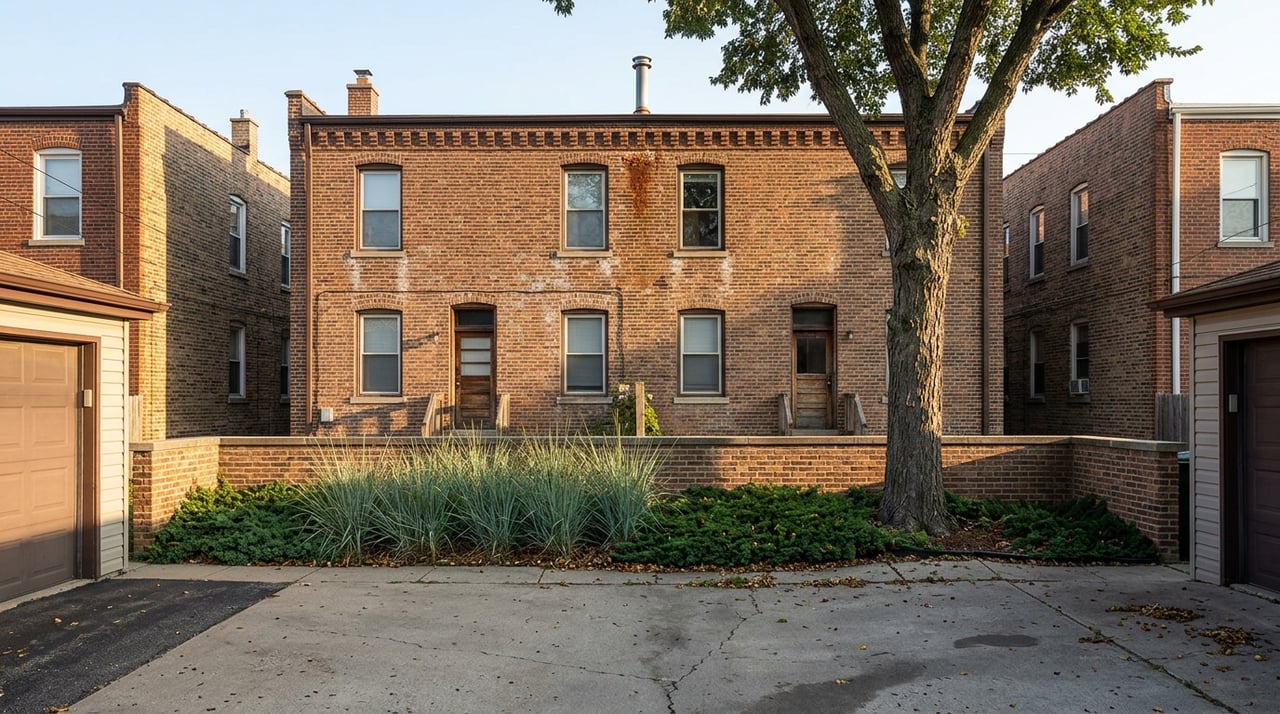
Brighton Park Already Absorbed the Hard Part of Archer Avenue's Rebuild
August 27, 2026
August 27, 2026
Here is the part most coverage of Archer Avenue skips: Brighton Park did not get invited into the city's newest corridor plan. It already lived through a smaller version of it, took the criticism, forced a revision, and is now watching that same playbook get repeated up and down a 6.3-mile stretch of the same street.
If you walk or drive Archer between 47th and Western most mornings, you already know the physical evidence. Concrete bump-outs. Protected bike lanes with barriers instead of paint. A community center with new signage where there used to be a vacant lot. A liquor license notice taped to a storefront window near Kedzie. None of this reads as random to someone who has followed it block by block, and none of it is actually random. It is the visible residue of a fight that happened here first, months before the city decided to scale the same approach across the rest of the avenue.
Earlier this year, the Chicago Department of Transportation rolled out a Complete Streets safety project along Archer between 47th and Western, adding protected bike lanes and curb bump-outs meant to slow traffic and shorten pedestrian crossings. Residents and business owners pushed back hard. A group delivered a petition with more than 3,400 signatures to the office of Ald. Julia Ramirez, asking the city to remove the newly installed concrete barriers.
The complaints were practical, not abstract. Juan Castro, who owns Monterrey Bakery on the corridor, put it plainly: "People come and don't know where to park." Others worried about delivery trucks, tight turns, and a stretch of road that already carries heavy freight traffic toward the Corwith Intermodal facility a few blocks north.
The pushback got a response. Ramirez's office announced an updated version of the project built around three priorities: improving traffic flow, enhancing pedestrian safety, and expanding parking availability. CDOT confirmed it was making targeted modifications at select intersections in direct response to community feedback and field observations, rather than sticking with the original design as installed.
By midsummer, the temperature had dropped. Daniella Hernandez, who lives on Archer, told Block Club Chicago that "once people get used to the bike lanes, they're not going to complain as much." She still wants safer streets, just not at the cost of the parking her neighbors rely on for the businesses that line the corridor.
That resolution matters beyond Brighton Park's own blocks, because it became the template.
In July, the city's Department of Planning and Development and the Regional Transportation Authority announced Moving Archer Forward, a multi-year initiative covering the full 6.3-mile stretch of Archer Avenue from Cicero Avenue to Halsted Street, which runs through Bridgeport, McKinley Park, Brighton Park, and Garfield Ridge. The plan bundles street redesigns, CTA station upgrades, park investment, and an estimated 280,000 square feet of new retail space along the corridor.
Michael Horsting, a regional planner involved in the effort, described Archer as a corridor with real gaps in its fabric, including vacant lots and underused buildings, even though traffic volume on the street is already heavy. The city opened a public survey to gather input, which closed in early August, and the plan was slated to go before the Chicago Plan Commission the following month.
Here is the detail worth sitting with: this is functionally the same conversation Brighton Park already had, just applied to a longer stretch of the same street with more institutional backing behind it. Brighton Park's segment absorbed the friction first and forced a mid-course correction on parking and traffic flow before the city ever attached a name and a budget line to the bigger version. Neighbors in Bridgeport and Garfield Ridge are about to have opinions on bike lanes and bump-outs that Brighton Park residents already worked through in real time.
That is not a small thing for anyone who owns property or runs a business along Archer here. It means the corridor's next phase of investment, the retail space, the station upgrades, the park dollars, is explicitly being planned around a street segment that already proved it could survive a redesign fight without losing its commercial base.
While the traffic fight played out, two very different kinds of doors opened along the same corridor, and both say something about where Archer Avenue actually stands right now.
Neither of these is a coincidence tied to the road project, but neither happened in a vacuum either. A nonprofit investing in a permanent, multi-story headquarters and a growing restaurant group choosing to open its third location here are both bets that Archer Avenue's daily foot traffic and neighborhood loyalty are worth building around, even in the middle of a construction fight over bike lanes.
The practical takeaway for anyone already calling Brighton Park home is this: the disruptive phase on your stretch of Archer is largely behind you, not ahead of you. CDOT has already revised its approach once in response to local pressure, and the corridor plan now being drafted for the rest of Archer is being built with that revision baked in. That does not mean every future change will land smoothly, but it does mean the loudest fight over parking and bike lanes already happened on your blocks, and it already produced a compromise rather than a stalemate.
It also means the next round of investment dollars, retail space, and station upgrades under Moving Archer Forward is coming to a corridor that just spent months proving residents and business owners will show up, organize, and get a plan adjusted rather than simply absorb whatever the city proposes. That is worth knowing whether you are watching from a stoop on Rockwell or driving past the new bump-outs on your way to Monterrey Bakery.
Archer Avenue is not finished changing. But Brighton Park is no longer the neighborhood waiting to see what a redesign looks like. It is the neighborhood the rest of the corridor is now being modeled after.
If you are trying to make sense of what a changing block means for a home you already own, a two-flat you are weighing as a rental, or a purchase you are considering nearby, This Is IT knows this stretch of the Southwest Side block by block. Contact us when you are ready to talk through what it actually means for your property or your next move.
Stay up to date on the latest real estate trends.
Experience personalized guidance, investor-focused expertise, and local knowledge designed to help you achieve your real estate goals.