How Much of Humboldt Park's Price Is Actually the 606 Trail?
September 10, 2026
September 10, 2026
In February 2026, Redfin put Humboldt Park's median home sale price at $455,000. Zillow's automated estimate for the same set of zip codes landed closer to $389,000. By June, Homes.com was showing a median near $475,000. Three companies, three numbers, all pulling from the same rough patch of the West Side, and none of them technically wrong. They're measuring different things: Redfin's figure comes from closed sales that month, Zillow's is a modeled estimate across every home in the area whether it sold or not, and Homes.com's number leans on active listings. If you're comparing Humboldt Park to Logan Square or Wicker Park using a single "median price" pulled from whichever site loaded first, you're comparing three different instruments, not three different markets.
That confusion would be a footnote almost anywhere else. In Humboldt Park it points at something bigger. The neighborhood's price story has been built for a decade around one landmark: the 606 Trail. But a 2026 peer-reviewed study using Cook County parcel data from 2010 through 2022 found that the trail's actual price effect fades fast, and once you map that decay against where people are actually buying in Humboldt Park, the trail is doing a lot less work than the listing copy suggests.
The study, published in the Journal of Property Research using a difference-in-differences model on assessed values, found that the 606's premium shrinks by roughly 0.037 log points for every kilometer you move away from the corridor. Translated out of academic notation, that means the boost to a home's value drops steadily the farther you get from the trail, and the researchers found the effect approaches zero at around two kilometers out.
Two kilometers is about 1.2 miles. The 606 itself runs along the old Bloomingdale Avenue rail line, its western tip landing near Ridgeway Avenue on Humboldt Park's northern edge. Humboldt Park the neighborhood extends well south and west of there, well past that two-kilometer line, down through blocks that sit around Humboldt Park the actual park, with its lagoons and its boathouse, closer to California and Division. Those blocks are still part of "Humboldt Park" on every listing site. They are not, based on this research, still inside the trail's measurable price effect.
That's the gap between the neighborhood name and the neighborhood's mechanism. A two-flat two blocks from the Julia de Burgos Park entrance on Albany Avenue, one of the trail's actual access points, is playing a different pricing game than a two-flat near the McCormick Tribune YMCA entrance on Lawndale, and both of those are playing a different game than a greystone six blocks south near Division Street's Paseo Boricua corridor. Same zip code. Different price mechanics.
This is where the portal discrepancy stops being a curiosity and starts being useful. If Humboldt Park's housing stock is genuinely split between a trail-adjacent tier and a everything-else tier, then how a valuation tool weights those two tiers will change its output more than any actual shift in the market.
Zillow's estimate draws on every home in its dataset, including the much larger stock of vintage two-flats and worker cottages that sit outside the trail's radius, which pulls its number down. Redfin's median reflects only what actually closed that month, and closed sales skew toward whichever segment happened to be active, which can pull the number up or down depending on whether that month's activity was concentrated near the corridor or further out. Neither is gaming the number. They're built to answer different questions, and Humboldt Park is one of the few Chicago neighborhoods where the underlying market is genuinely two markets wearing one name.
If you're working with an agent who quotes you a single median without naming the source, ask which one it is. The $66,000 to $86,000 spread you'll see across sites this year isn't noise. It's the trail effect showing up as measurement error because it isn't evenly distributed across the neighborhood it's supposedly lifting.
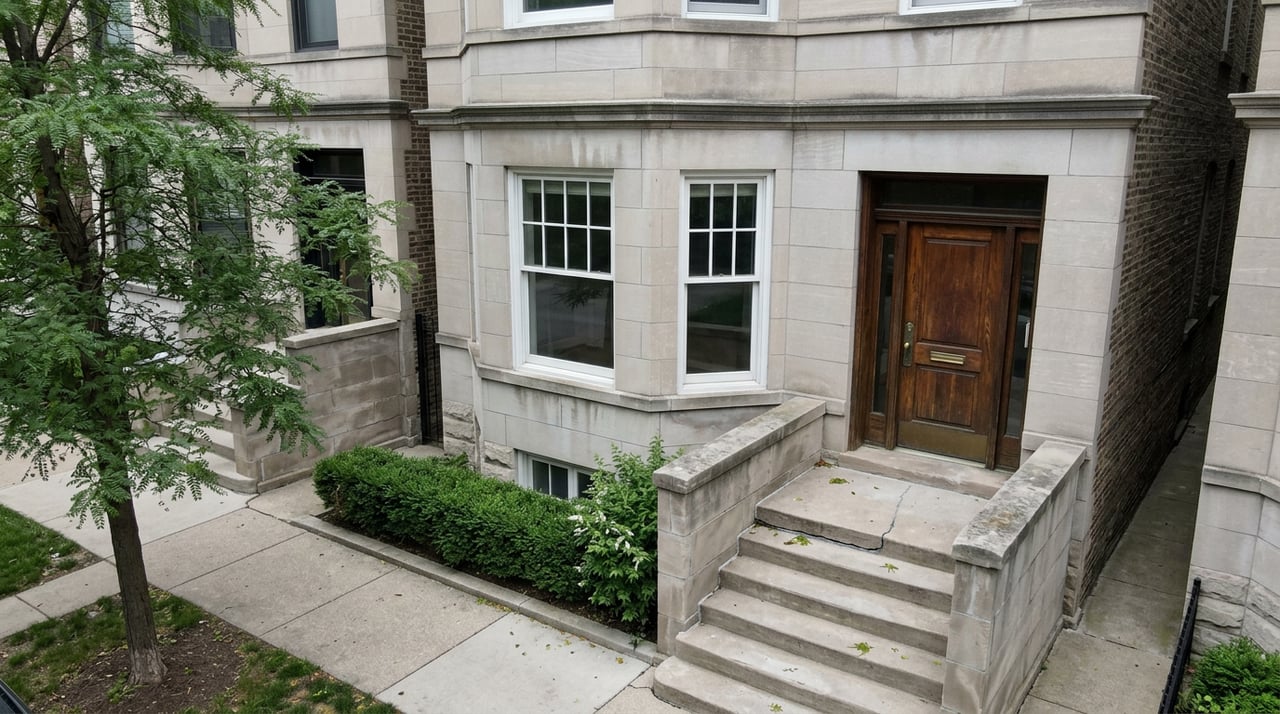
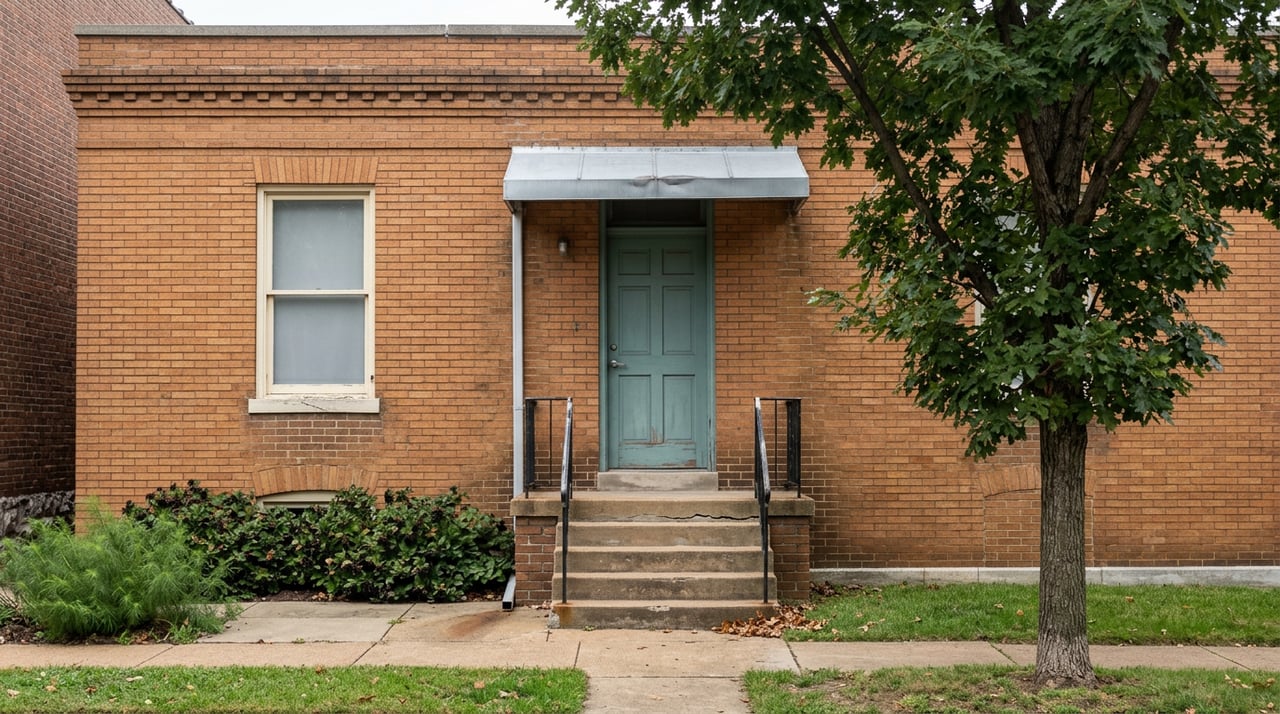
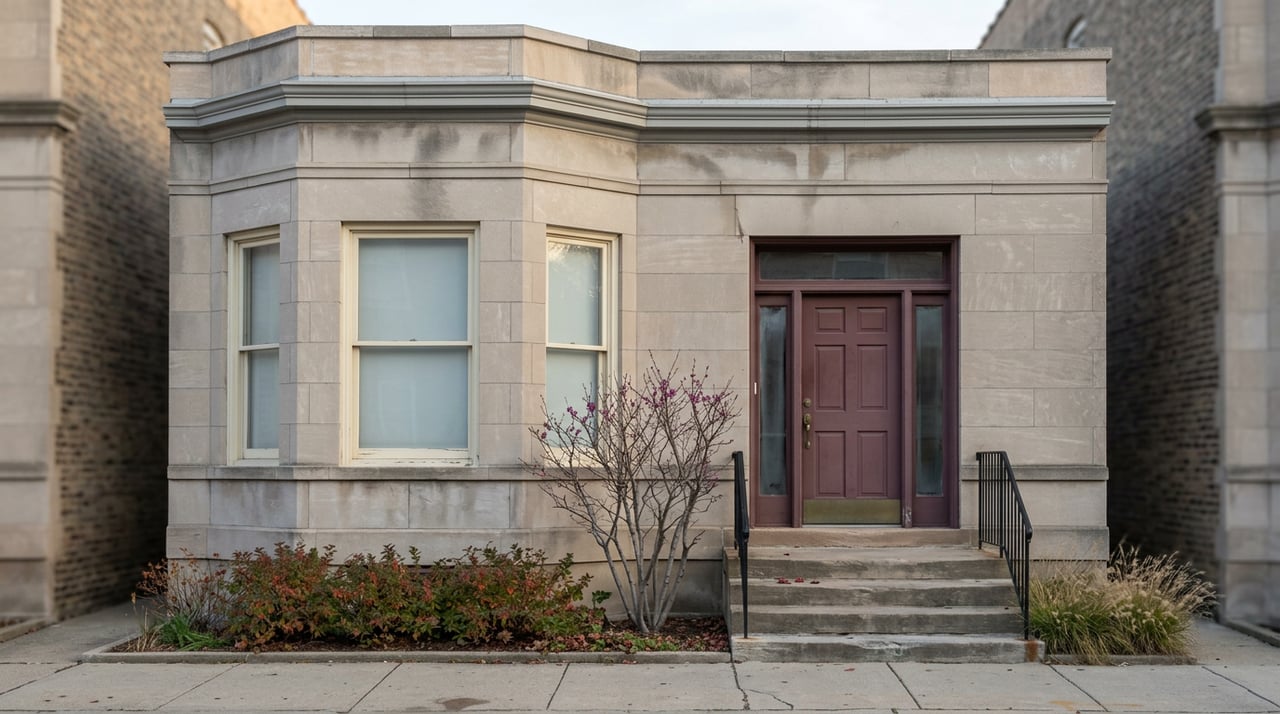
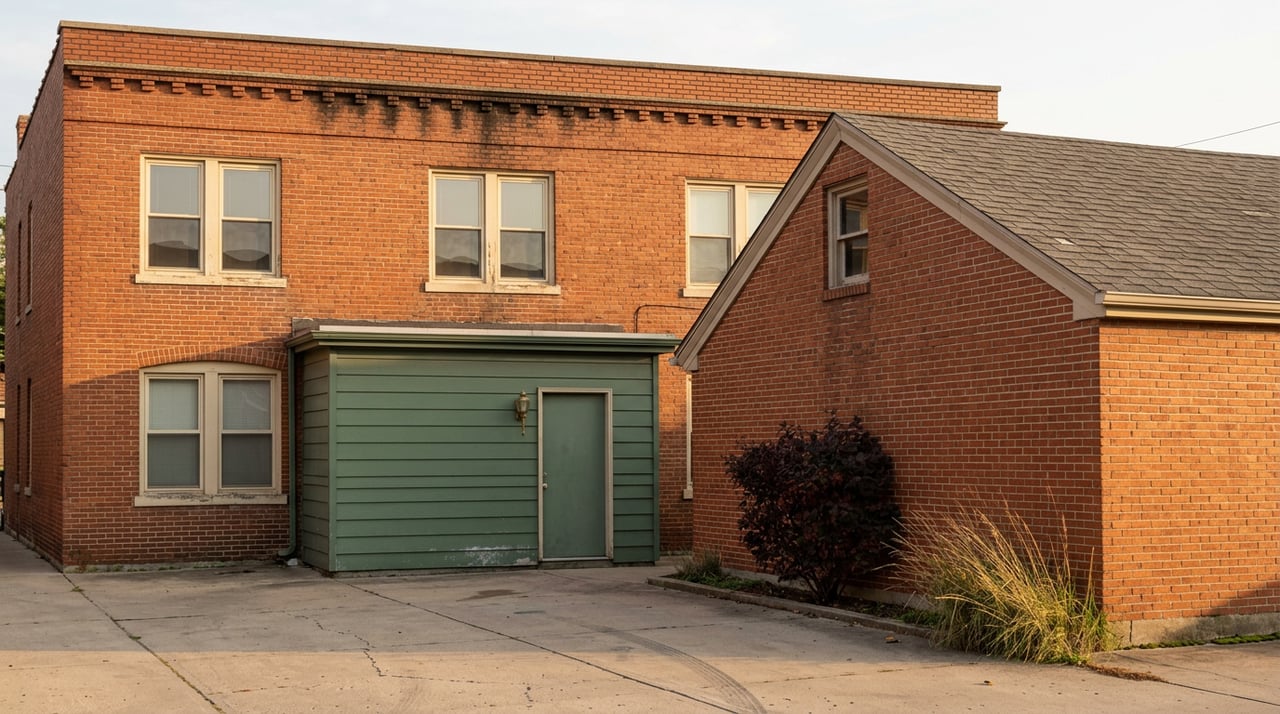
Walk south from the trail and the housing stock tells its own story. Roughly a third of Humboldt Park's homes sit in two-unit buildings, with another quarter in three-to-four unit structures, and the typical building dates to around 1931. That's brick two-flats, courtyard buildings, and greystones built for owner-occupants who rented out the other unit, not the newer luxury rehabs that lean on trail proximity in their listing copy.
This is also where the neighborhood's house-hacking math actually lives. Recent multi-unit listings in the area show owner-occupant scenarios where two rented units cover close to $4,000 a month in combined income while the buyer lives in the third, numbers that have nothing to do with distance to Bloomingdale Avenue and everything to do with unit count, condition, and whether the rents are already at market or still catching up. A 1931 three-flat with tenants paying below-market rent is a different underwriting exercise than a rehabbed trail-adjacent two-flat, even if both show up under the same "Humboldt Park" search filter.
The neighborhood's investment in family-sized housing outside the trail corridor is also active right now. Hispanic Housing Development Corp opened a 40-unit building at 1237 N. California Ave in early 2026, directly across from the park, with rents ranging from $900 to $1,800 a month, a project the Chicago Sun-Times reported was fully leased shortly after opening. That's development activity anchored to the park itself, not the trail, and it's a sign the neighborhood's momentum has more than one engine.
None of this means the trail doesn't matter. The study's own data confirms a real, measurable premium close to the corridor. It means "near the 606" is a claim that should be checked in blocks, not accepted as a neighborhood-wide fact. Before you weight a listing's price against its trail proximity, it's worth asking a few concrete questions:
A first-time buyer choosing between a rehabbed condo near the corridor and a vintage two-flat six blocks south isn't choosing between two versions of the same neighborhood. They're choosing between two different price mechanisms that happen to share a mailing address.
Does living near the 606 guarantee a home will hold its value better? No study can promise that, and past performance in any market segment doesn't guarantee future results. What the research shows is a historical, measurable correlation between proximity and price capitalization through 2022. That's evidence for how the mechanism has worked, not a forecast.
How do I find out if a specific address is inside the trail's price radius? Start with the trail's own mapped access points, including the Julia de Burgos Park entrance at 1805 N. Albany Ave and the McCormick Tribune YMCA entrance at 1834 N. Lawndale Ave, and measure walking distance from there rather than from the neighborhood's center.
Why do Zillow, Redfin, and Homes.com show different numbers for the same neighborhood? Each pulls from a different data source and answers a different question. Redfin reports closed sales for a given month, Zillow's estimate models value across the full housing stock whether or not it's on the market, and Homes.com's figures often reflect active listings. In a neighborhood with a genuine internal price split like Humboldt Park, that methodology gap shows up as a bigger spread than you'd see in a more uniform market.
Whether you're weighing a trail-adjacent condo against a vintage two-flat six blocks south, or trying to figure out what a multi-unit building's numbers actually support, This Is IT can walk the comps with you block by block instead of by zip code. Contact us.
Stay up to date on the latest real estate trends.
Experience personalized guidance, investor-focused expertise, and local knowledge designed to help you achieve your real estate goals.