The Boundary Line That Splits Irving Park's Renovation Rules in Half
September 17, 2026
September 17, 2026
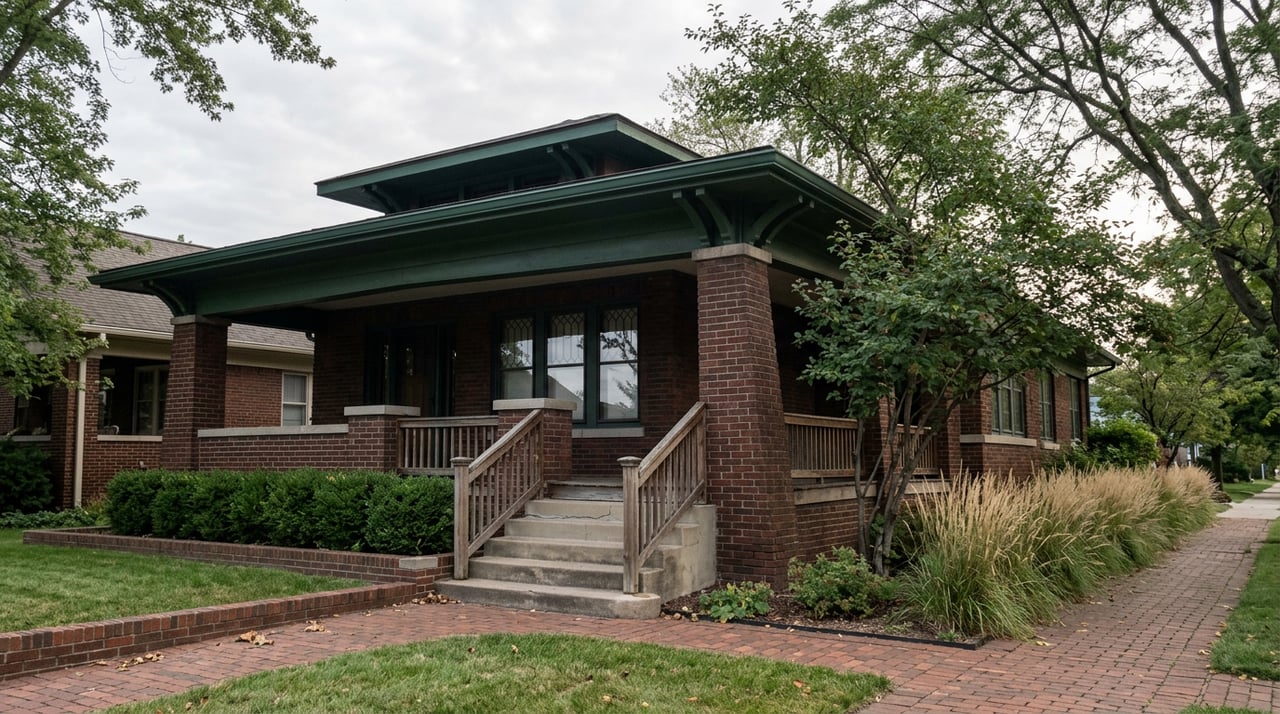
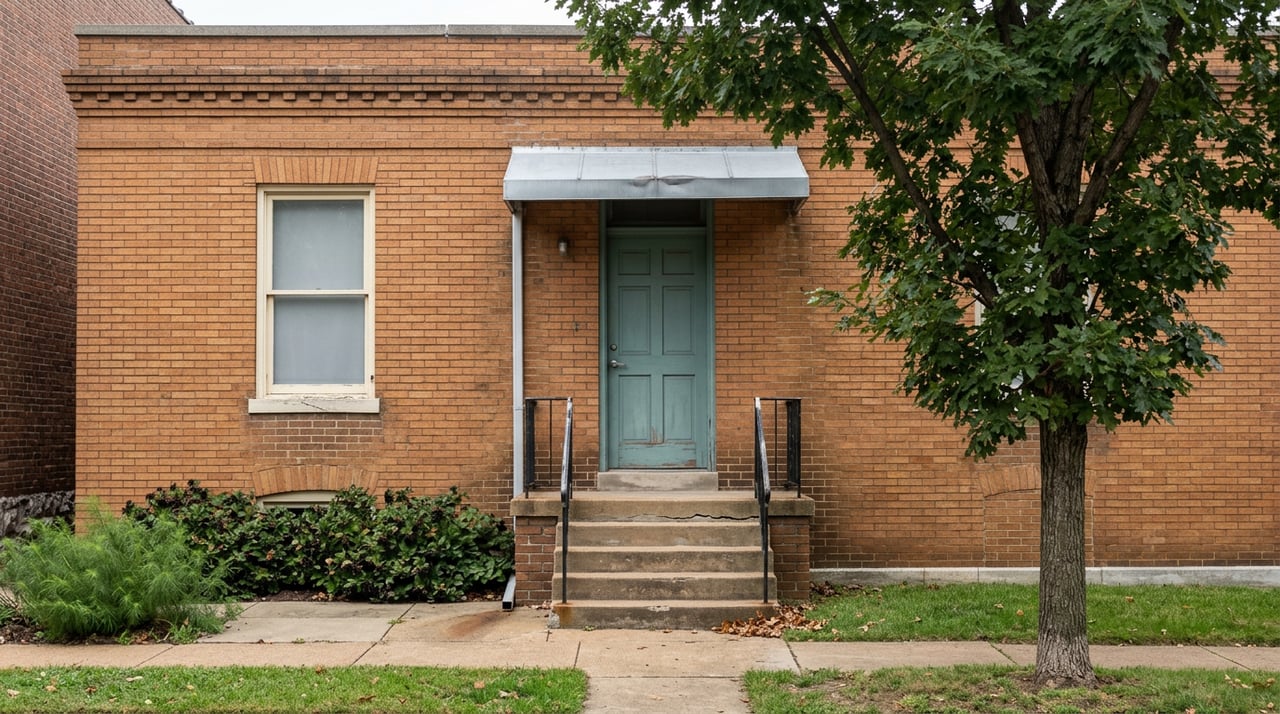
Walk two blocks on North Springfield Avenue in Old Irving Park and you will pass bungalows built within a decade of each other, roofed in the same cedar-shingle style, sitting on similarly sized lots. One has a small brass Chicago Landmark plaque near the front steps. The other does not. To a buyer touring both on the same Saturday, they read as the same house at the same price point with the same renovation potential.
They are not. The one with the plaque sits inside the Villa District, a pocket bounded by Pulaski Road on the west, the Union Pacific/Northwest Metra line on the north, Hamlin Avenue on the east, and Addison Street on the south. Before an owner there can touch a window, replace siding, add a dormer, or reroof, the project needs a Certificate of Appropriateness from the Commission on Chicago Landmarks. The house two doors down, outside that line, does not carry that requirement at all.
Nothing on a listing sheet tells you which house you are looking at.
The Villa District was added to the National Register of Historic Places in 1979 and designated a Chicago Landmark District in 1983, the same year the city expanded the district's formal boundaries to add the Villa Apartments. It is a compact area, roughly 126 bungalows across seven blocks, built starting in 1902 by architects working in the Prairie School and Arts and Crafts traditions. Many of the original homes came from the firm of Hatzfeld and Knox, whose partner Clarence Hatzfeld later designed the fieldhouse and natatorium at Portage Park. Journalist Mike Royko once nicknamed the area the Polish Kenilworth, a reference to its concentration of Polish families and its resemblance, in his eyes, to the North Shore suburb.
That landmark status is not decorative. It means the boundary itself, not the zip code and not the community area name, determines whether a renovation goes through an extra layer of city review before a contractor can pull a permit.
Inside the Villa District, exterior changes need sign-off before the Department of Buildings will process a permit. Based on how contractors who work in the district describe the process, and how the Commission on Chicago Landmarks documents its own approvals, the pattern looks like this:
Generally requires a Certificate of Appropriateness:
Generally does not require landmark review:
The line is not always as clean as that split suggests. The Commission's own September 2022 permit report shows an entry for a home on North Springfield in the Villa District where the approved work was a straightforward 200-amp electrical service upgrade, logged and reviewed alongside exterior projects rather than waved through as routine. That is a useful data point for anyone assuming landmark review only touches things a passerby would notice. Once a property sits inside the boundary, more of its paperwork runs through the Commission than the phrase "exterior work only" implies.
Irving Park's housing stock outside the Villa District is not new either. The Old Irving Park core, sometimes called Grayland, dates to the 1870s, and the surrounding bungalow blocks were largely built in the 1920s and 1930s. Homes of that age carry a predictable set of conditions that only show up once walls come open: plaster-and-lath construction, galvanized or cast iron plumbing, knob-and-tube wiring in sections never touched by a later rewire, and clay tile sewer lines that were standard before 1960 and are now decades past their expected life.
None of that is unique to Irving Park. What is worth naming is what happens when those two facts stack. A buyer who plans to rewire a 1920s bungalow, replace failing galvanized plumbing, and swap out a few original windows while they are at it is already looking at a project that touches walls, systems, and exterior openings all at once. According to one Chicago remodeling contractor's 2026 cost breakdown, a full knob-and-tube rewire on a home this age runs $12,000 to $22,000, galvanized plumbing replacement runs $8,000 to $18,000, and pre-1978 lead paint work adds another $4,000 to $12,000 depending on scope. A sewer camera scope on a clay tile line with root intrusion can point to a $10,000 to $20,000 repair before anyone touches the kitchen.
Do that same project on a Villa District address and the window and exterior components of the scope now need a Certificate of Appropriateness before the city will even open a permit file. The rewiring and plumbing might not require it. The windows almost certainly will.
Cost is the easier number to plan around. Timeline is where buyers get caught.
For a standard Chicago bungalow outside any landmark boundary, a contractor quoting a second story or dormer addition typically estimates 5 to 9 months from design through construction, once stamped architectural drawings, structural engineering, and standard zoning review are factored in. That is the baseline for a straightforward vintage remodel with no landmark layer involved.
Add landmark review on top of that, and the Certificate of Appropriateness step happens before the standard permit clock even starts running. It is not a parallel process, it is a prerequisite one. For a buyer financing a renovation, or an investor underwriting a flip on a carrying-cost budget, that difference is not cosmetic. It is additional months of a mortgage payment, additional months before a rental unit can go on the market, additional months where a hard money loan keeps accruing interest, all stacked in front of the same permit timeline every other bungalow buyer in the neighborhood is already working with.
Search a few real estate sites for Irving Park's median price and you will get answers that do not agree with each other. As of March 2026, one source put the broader Irving Park community area's median close to $475,000, while a narrower slice specifically labeled Old Irving Park reported a median around $480,000 for the three months ending that same month. Those two figures sit close enough that the gap between them is not the interesting part. Different platforms draw the neighborhood's edges differently, and none of them draw the one edge that actually changes your renovation timeline.
A median price tells you what closed. It tells you nothing about which side of Pulaski, the Metra line, Hamlin, or Addison a given address falls on, and therefore nothing about whether your renovation plan needs an extra approval step before it needs a contractor.
If you are looking at anything built before 1930 in or near Old Irving Park, a few questions are worth asking before you write an offer, not after:
None of this makes a Villa District bungalow a worse purchase. Many buyers want the review process precisely because it protects the architectural character that makes the district worth living in. It does mean the math changes, and the math should change before closing, not during the second month of a permit application you assumed would take six weeks.
How do I find out if a specific address is inside the Villa District? The boundary runs along Pulaski Road, the Union Pacific/Northwest Metra line, Hamlin Avenue, and Addison Street. If an address falls inside those four streets, treat it as inside the district and confirm with the Commission on Chicago Landmarks before assuming otherwise.
Does landmark status affect what I can do inside the house? Interior work that does not change the exterior generally moves through the standard permit process without landmark review, based on how the Commission has approved past projects in the district. Anything touching windows, siding, rooflines, or street-facing additions is the category to plan around.
Does being in a landmark district change financing or insurance? That question sits outside what this post can answer responsibly. It is worth raising directly with your lender and insurer before you are under a tight contingency deadline, since landmark status can factor into how some underwriters evaluate a renovation scope.
If you are weighing a bungalow purchase anywhere in Irving Park, whether it sits inside that landmark line or two blocks outside it, This Is IT can walk through what a given address actually allows before you write an offer. Contact us.
Stay up to date on the latest real estate trends.
Experience personalized guidance, investor-focused expertise, and local knowledge designed to help you achieve your real estate goals.