Buying a Two-Flat in Pilsen Chicago: Key Numbers to Know
August 6, 2026
August 6, 2026
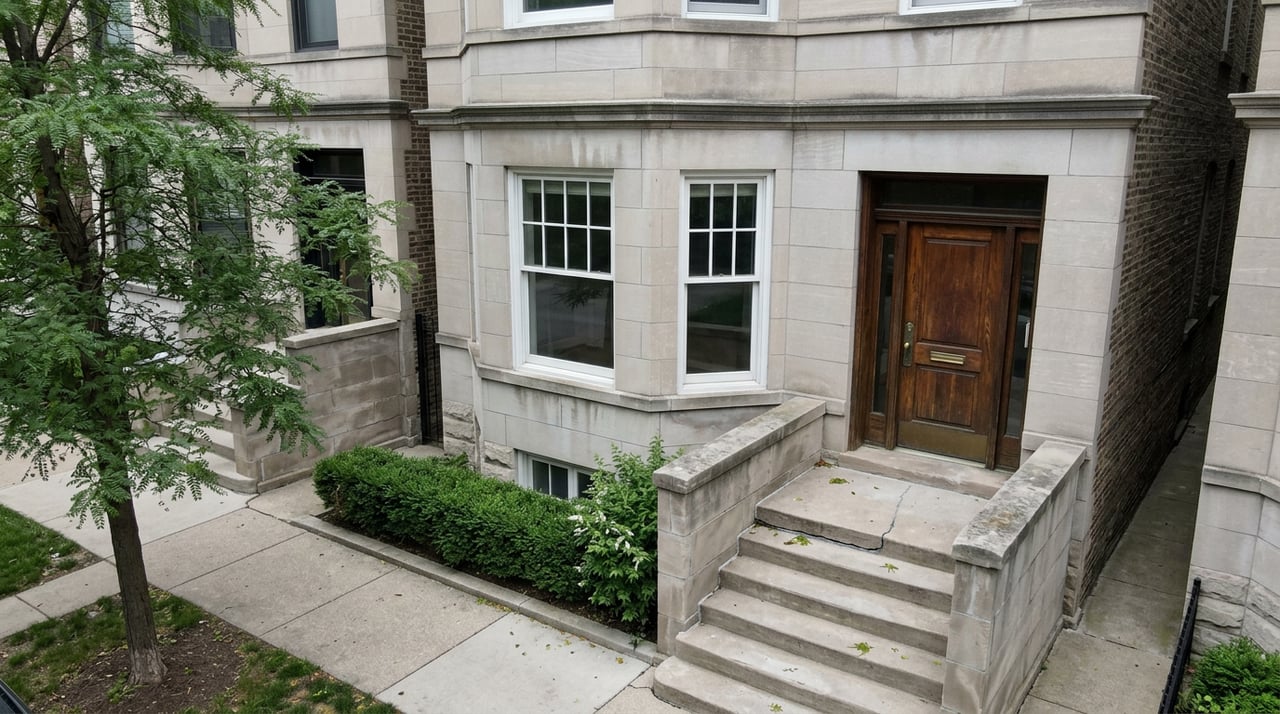
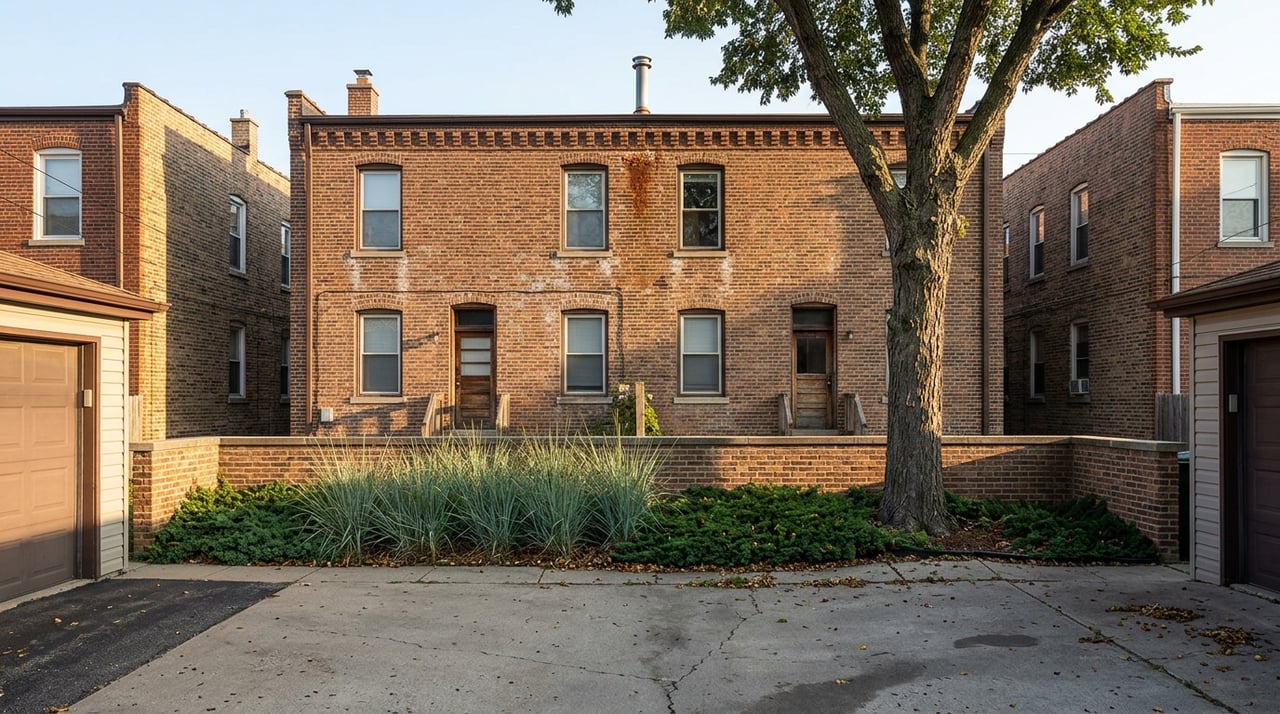
If you've been comparing Pilsen to Avondale, Logan Square, or Bridgeport by pulling up the median sale price on a portal, you're already working from a number that doesn't mean what it means in those other places. Pilsen is a majority-renter neighborhood where the two-flat and three-flat are the dominant housing product, and a city ordinance quietly makes sure it stays that way. That single rule shapes what you can buy, what you can do with it after closing, and why two respectable data sources disagree about the direction of prices.
Chicago passed an anti-deconversion measure targeted specifically at Pilsen and the area around the 606. Inside a boundary that runs roughly from Peoria Street to Wood Street and from 16th Street to Cermak Road, the rule blocks new single-family construction in RT-4 and RM zoning districts and requires a zoning change before an owner can combine a two- to six-unit building into a single-family home. The Institute for Housing Studies at DePaul framed the goal plainly: preserve the 2- to 6-unit stock that functions as naturally occurring affordable housing. Their 2018 research found Chicago lost more than 20,000 units in 2- to 4-unit buildings between 2010 and 2016, largely from deconversions in wealthier neighborhoods.
For a buyer, that has three practical consequences:
If you're house-hacking, this ordinance is a feature. If you're buying with the assumption that a two-flat is a stepping stone to a single-family reno, it's a wall you need to price in before you write an offer.
Look at Pilsen through Zillow and you see the ZHVI at $398,682, down 3.7% year over year as of mid-2026. Look at it through Redfin and the Pilsen Historic District median sale price is $506K over the three months ending March 2026, with price per square foot up 48.3% year over year to $393. East Pilsen's December 2025 median came in at $415K, up 20.3% from the prior year.
These aren't contradictions to argue about. They're two different products in the same ZIP code. The ZHVI weights the full housing stock, most of which is rented and much of which is older multifamily. The Redfin median tracks what actually sold, which in a low-volume market skews toward whichever renovated condos, single-families, or gut-rehabbed multi-units happened to close that quarter. In March 2026, only nine homes sold in the historic district. A handful of new-construction duplex-downs near Throop Park or 18th Street will move that number a lot.
The takeaway for a buyer: don't shop the median. Shop the product type. The per-square-foot number is the more honest signal that finished, updated space in Pilsen is priced aggressively right now, even as the underlying older stock has softened.
The clearest read on the small-multifamily market comes from two Interra Realty deals that closed in the first quarter of 2026.
| Property | Units | Sale Price | Per Unit | Closed |
|---|---|---|---|---|
| 1754–1756 W. 21st Place | 12 (mixed-use) | $3.1M | $258,333 | Jan 2026 |
| 2156 & 2158 W. 21st St. | 24 (vintage, renovated 2023) | $5.1M | $212,500 | Mar 2026 |
Both buildings were fully occupied at closing. The 24-unit portfolio was constructed in 1893 and gut-renovated in 2023 with quartz counters, in-unit laundry, and updated bathrooms, and it still cleared at $212,500 per door. That's a reasonable anchor for anyone underwriting a 2- to 6-unit building in the same corridors. A well-located, renovated small multifamily in Pilsen is not trading at Wicker Park per-unit numbers, and it's not trading at south suburban numbers either. It sits in a lane that rewards owner-occupants who can hold, and punishes buyers who overpay on the assumption that a light cosmetic refresh will unlock rents that aren't there yet.
The Homes.com data pool tells the same story from the listing side. As of January 2026, seven Pilsen multifamily properties were listed with a median around $524,900 and an average of about 20 days on market, ranging from $385,000 up to $1.9M. Multifamily moves faster here than single-family, which matters if you're trying to time an offer.
Three realistic scenarios, using the current data:
Around $400K to $475K. You're shopping condos, including the loft conversions in University Crossing and East Pilsen mid-rises, or a smaller two-flat that needs work. This is the tier where the deconversion rule matters most: a fixer two-flat can be a great house-hack, but only if you underwrite it as a two-flat, not as a future single-family.
Around $500K to $700K. You're in the heart of the current market. Renovated two-flats and three-flats with separate utilities, newer-construction duplex-downs near Throop Park, and single-family homes with modest updates. The 24-unit Interra comp suggests this range is where owner-occupied small multifamily gets financially interesting, especially if you can qualify for an FHA or conventional owner-occupant loan on a two-to-four-unit building.
$800K and up. Larger four-flats with coach houses, gut-renovated compounds, and the occasional new-construction single-family on a double lot. Crain's reported a converted Pilsen two-flat listing in early 2026 at just under $1.7M, which is the ceiling for the neighborhood, not the middle.
At every tier, the specific block matters more than the address range. Proximity to the CTA Pink Line stations at Damen (2010 S. Damen) and 18th Street (1710 W. 18th) carries a real premium. The Pink Line runs without slow zones outside the Loop as of April 2026, according to CTA's own slow zone map, which is worth something on a Monday morning. Halsted Metra on the BNSF line is a second commuter option most buyers underuse.
Pilsen is not one market. The 18th Street corridor between Racine and Ashland, anchored by Thalia Hall and the National Museum of Mexican Art, is where restaurant demand keeps residential prices firm. HaiSous, The Tack Room, Punch House, and the Dvorak Park frontage are the demand-side reasons a Redfin median can print at $506K in a neighborhood where the ZHVI is under $400K.
West of Ashland toward Damen, and along the 21st Street corridor where Interra's recent multifamily deals closed, you're buying more building for the money, with the tradeoff of a slightly longer walk to the strongest retail. This is the zone to focus on if you're an emerging investor rather than a lifestyle-first buyer. The Illinois Medical District sits just to the north, which supports rental demand on the two-bedroom units that dominate the small-multifamily stock.
Can I convert a Pilsen two-flat into a single-family home? Not through a routine building permit if the property sits in the RT-4 or RM zoning within the anti-deconversion boundary. You'd need a zoning change, which is a public process with no guaranteed outcome. Underwrite the property as a two-flat.
Does the failed 2020 landmark district still affect what I can do to my building? The neighborhood-wide landmark district was voted down by the City Council Zoning Committee. Individual buildings can still be landmarked, and Thalia Hall at 18th and Allport remains one of Pilsen's two designated landmarks. Most Pilsen owners are governed by regular building and zoning rules, not landmark review.
Why is days-on-market so much lower for multifamily than for single-family here? Multifamily buyers are largely investors and house-hackers who underwrite on rent rolls and cap rates, not on emotional fit. When a building pencils, it moves. Homes.com's January 2026 snapshot showed Pilsen multifamily averaging around 20 days on market against a Redfin figure of 78 days for the broader Historic District. Different buyer, different clock.
Is the Zillow decline a warning sign? It's a mix signal more than a price signal. A neighborhood where 80% of residents rent, per Homes.com's snapshot, and where the sale volume runs single digits per month is going to produce a noisy ZHVI. The per-square-foot direction on closed sales is a better read on where finished product is priced today.
Pilsen rewards buyers who show up with a clear plan for the property type, financing structure, and hold horizon. If you're weighing a two-flat as a house-hack, a small multifamily as a first investment, or a condo purchase near the Pink Line, the This Is IT team will sit down with the rent roll, the zoning, and the block-by-block context so you can make the call with real information. Contact Us when you're ready.
Stay up to date on the latest real estate trends.
Experience personalized guidance, investor-focused expertise, and local knowledge designed to help you achieve your real estate goals.