Logan Square's Median Home Price Went Up 12% and Down 1% at the Same Time
September 3, 2026
September 3, 2026
Check two different sites for Logan Square's home values this year and you'll get two different stories. Redfin's transaction data puts the median sale price at $730,000 for the three months ending May 2026, up 12.3% from the same stretch a year earlier. Zillow's estimate of what a typical Logan Square home is worth, calculated across the entire existing housing stock rather than just what sold recently, puts that number at $444,945 as of late June 2026, down 1.4% over the same period.
Both are accurate. They're just measuring different things, and the gap between them tells you more about where Logan Square is headed than either number does on its own.
Redfin's median tracks what actually closed. If more expensive properties sell in a given quarter, the median rises, even if the value of the house down the street hasn't moved an inch. Zillow's typical value estimate works differently. It models the worth of every home in the neighborhood, sold or not, based on comparable data. When that number drifts down slightly while the sold median climbs, it usually means the properties changing hands look different from the properties that make up most of the neighborhood.
Homes.com's own July 2026 snapshot makes the same point inside a single data set. That month, the median home price in Logan Square was $625,000, but the average sale price was $717,850, a gap of nearly $93,000 in the same market during the same window. A median and an average only separate like that when a handful of high-priced sales are pulling the top of the distribution away from everything else. Something specific is selling at a premium, and it's common enough to move the numbers but not common enough to be the norm.
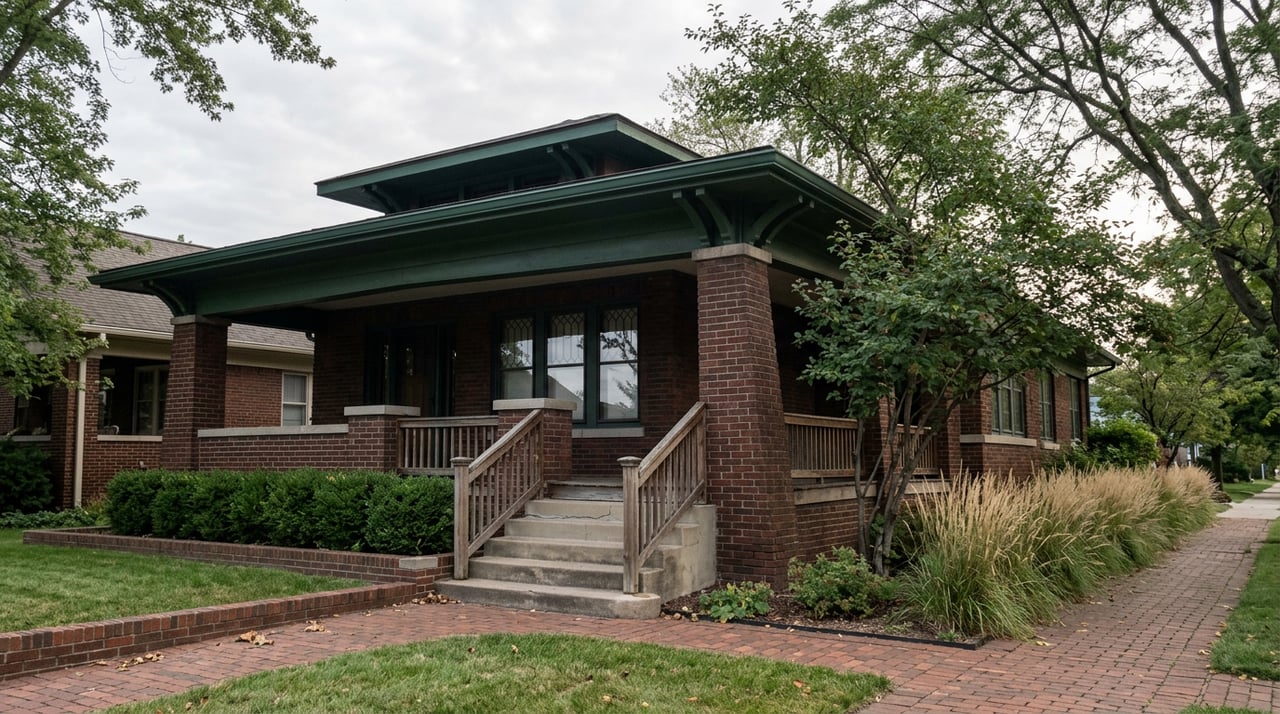
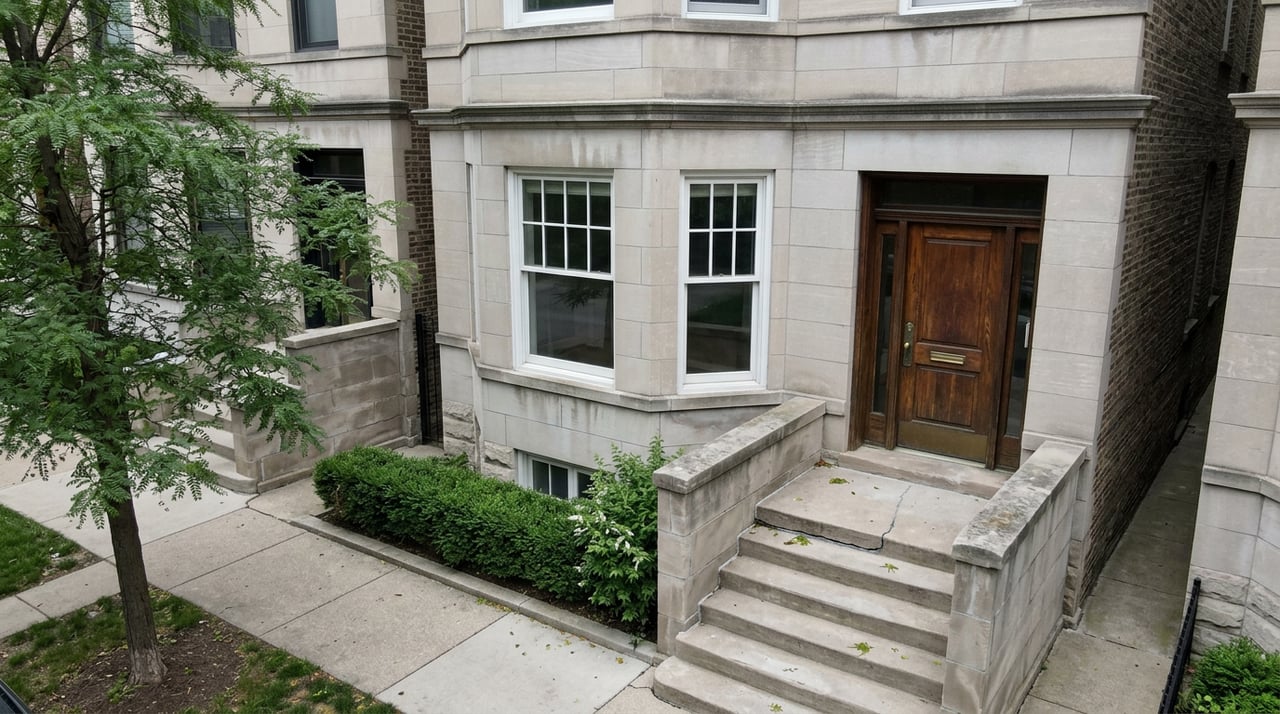
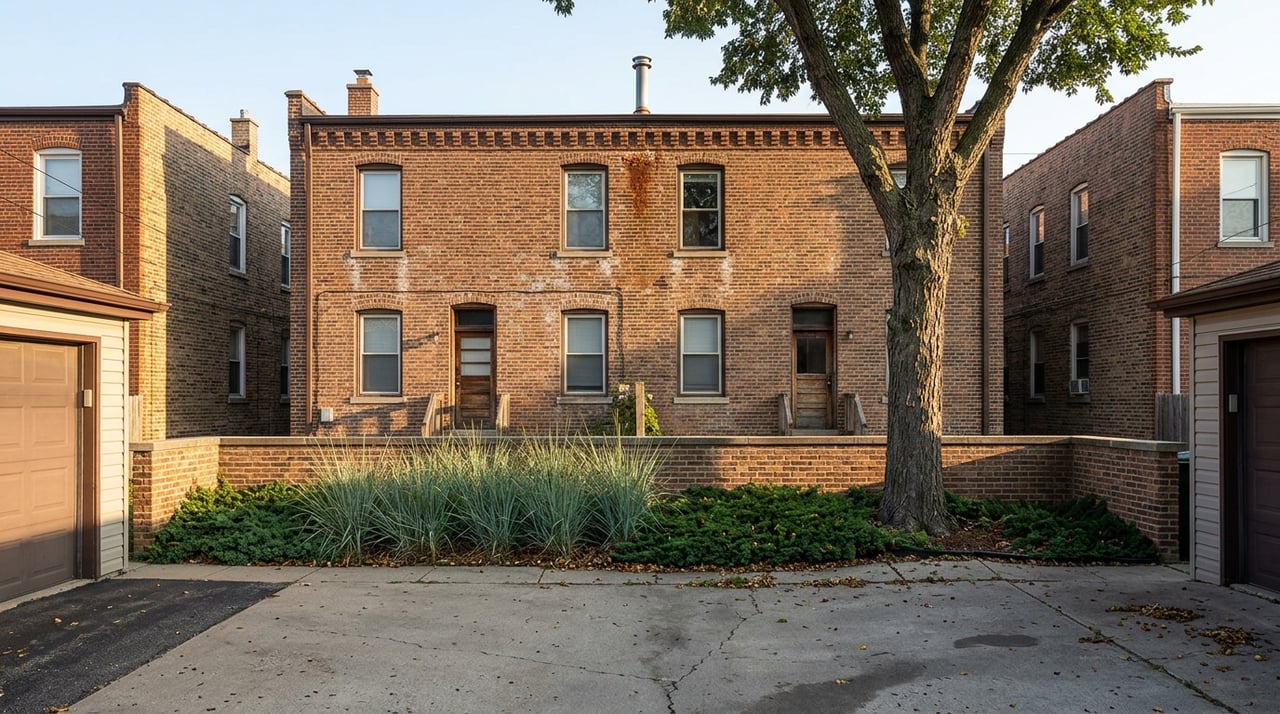
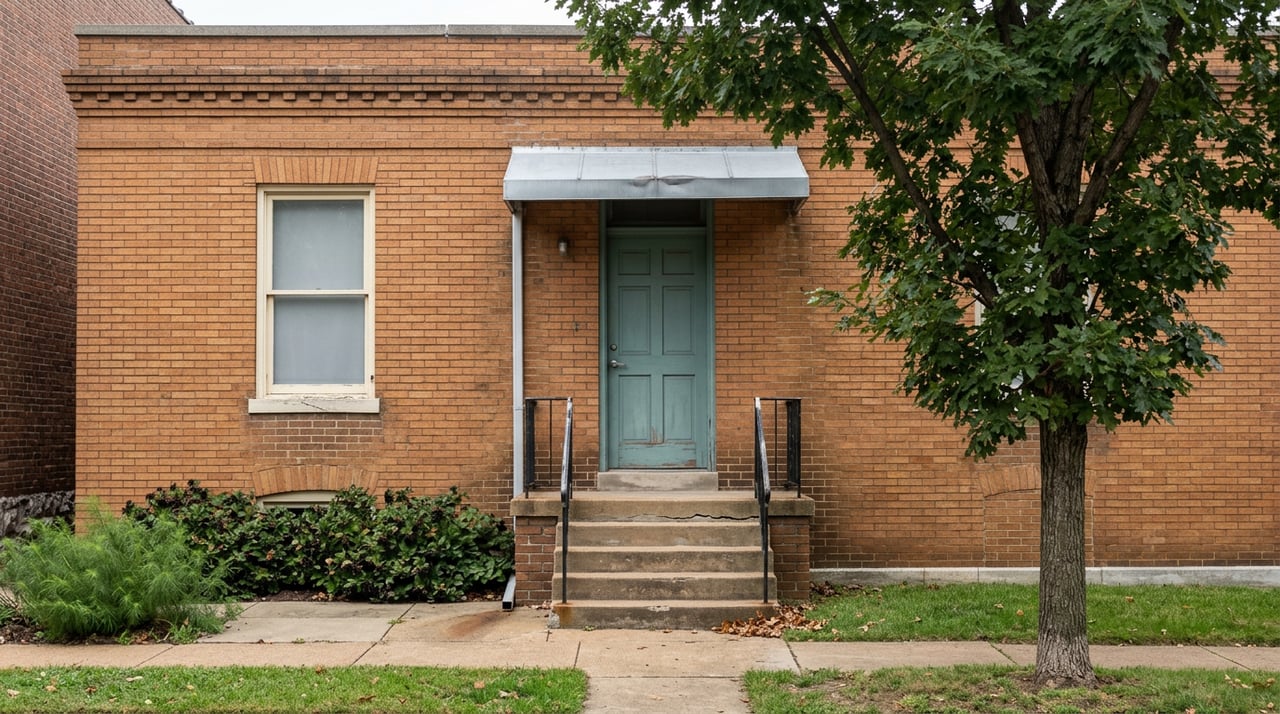
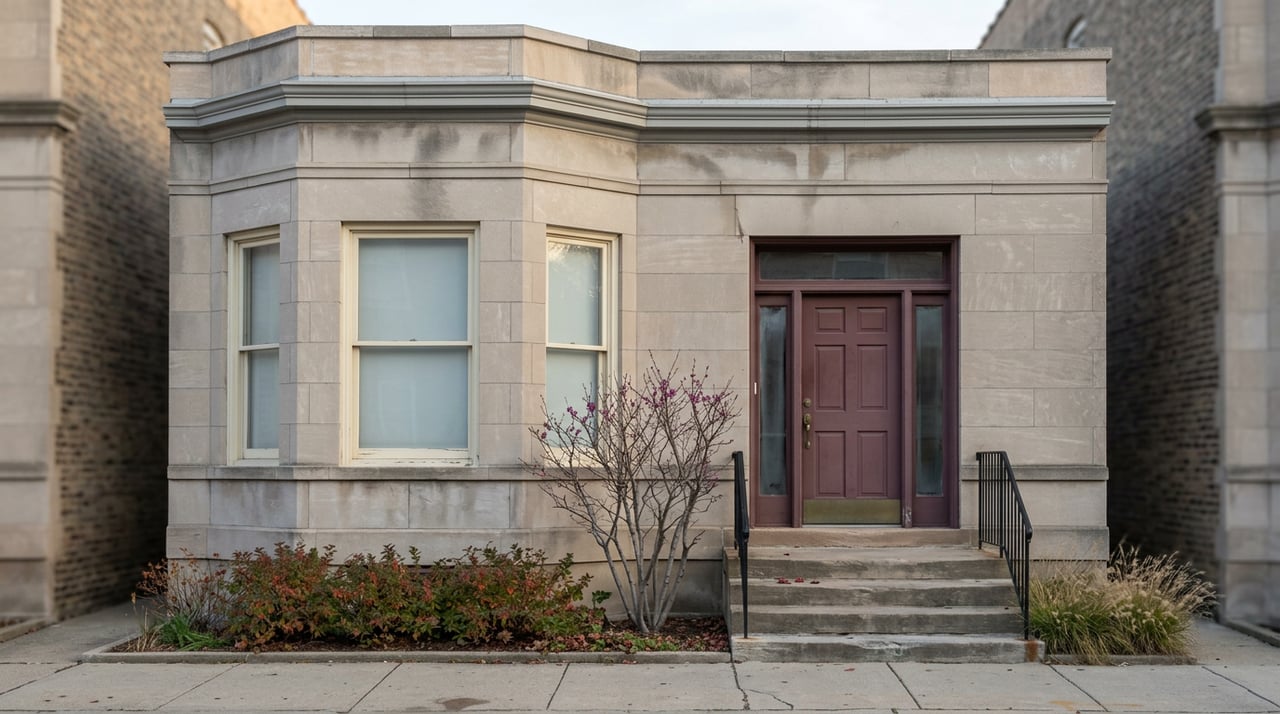
Logan Square's building stock skews old and small. Planning data covering the community area shows that close to 60% of housing units were built in 1939 or earlier, with a median construction year around 1944. Roughly 44% of units sit inside two-to-four-unit buildings, the cottages, worker's flats, and small courtyard buildings that have defined blocks here for a century.
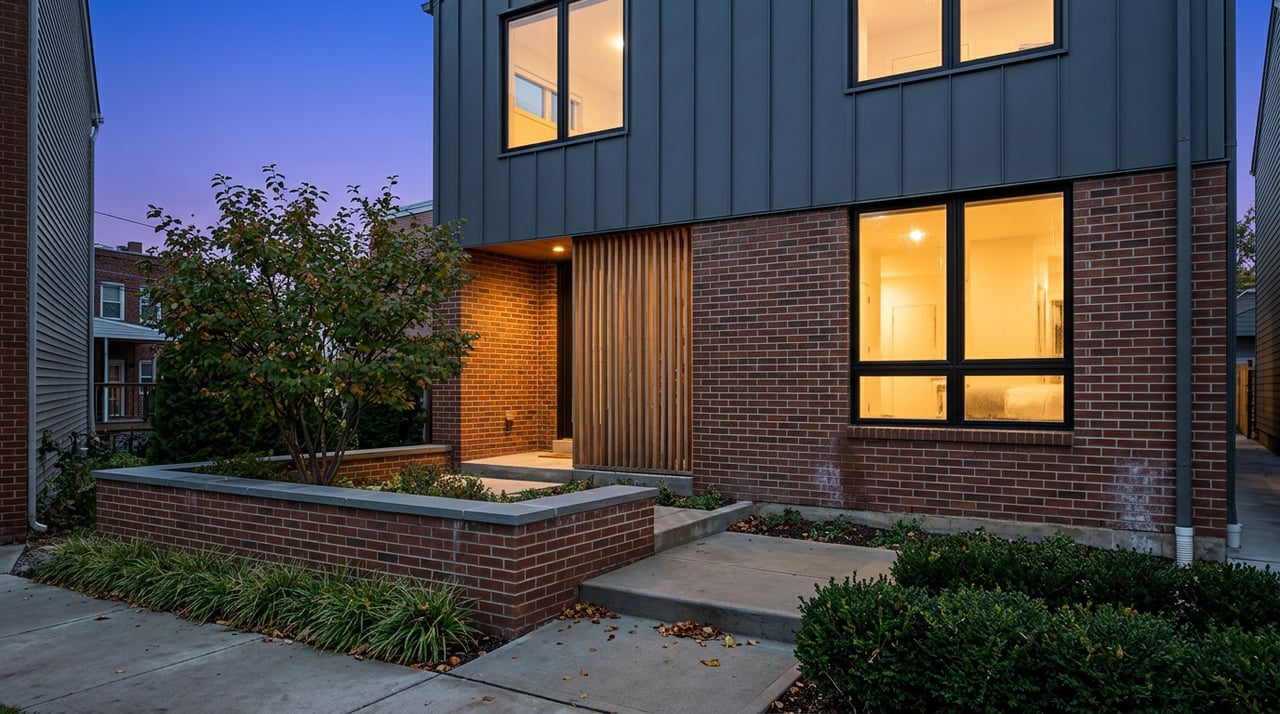
That combination, old housing plus small lots plus strong demand, is exactly the setup that makes teardown redevelopment financially attractive. A builder who can acquire an aging cottage on a standard 25-foot lot, demolish it, and put up a new single-family home or a small condo building is trading a low basis for a much higher sale price. The Chicago Workers Cottage Initiative tracked this directly. Looking at properties sold between 2017 and 2020, they found 16 worker's cottages selling at a median of $375,500 and 10 two-flats selling at a median of $388,000, all standing on standard lots in good condition. Every one of those properties was demolished shortly after sale. In their place went 16 new single-family homes with a median sale price of $1,047,500, and 10 new condo buildings whose 26 total units sold for a median of $576,500 per unit.
That's not a modest markup. It's a different market entirely, transacting on the same block, in the same zip code, sometimes in the same calendar year as the older housing it replaced. Every time one of those swaps closes, it pulls the sold median up while doing nothing for the estimated value of the cottage two doors down that didn't sell.
The city has been trying to slow this exact pattern for five years, and the rules changed again recently. In March 2021, Chicago passed a demolition surcharge covering the area around the 606 Trail and part of Pilsen: $15,000 to demolish a house, townhouse, or two-flat, and $5,000 per unit to demolish a larger multi-unit building. City data presented to the council in 2022 showed the surcharge working as intended. Demolitions along the 606 had dropped 88% since the ordinance took effect, and 25% in Pilsen.
In September 2024, the city went further. The Northwest Side Preservation Ordinance quadrupled the surcharge, to $60,000 per building and $20,000 per unit, extended the pilot's sunset date to December 31, 2029, and expanded the covered boundary into what the ordinance calls the 606 Predominance of the Block District, now spanning parts of Avondale, Hermosa, Humboldt Park, Logan Square, and West Town.
Here's what that means for the math. A $60,000 surcharge is a real cost, but set against a new construction sale price north of a million dollars, it's a rounding error for a builder targeting the top of the market. It's a much bigger obstacle for a smaller-scale project where the margin was thinner to begin with. The surcharge doesn't stop redevelopment. It raises the floor for who can afford to do it, which likely pushes more of the activity toward the highest-value swaps, the exact kind that keep showing up in the sold data and keep widening the gap between the sold median and the typical value estimate.
Not every current project fits the teardown-to-mansion pattern, and it's worth being specific about what's in the pipeline. Recent permit activity tracked by Urbanize Chicago shows several sizable apartment developments moving forward in Logan Square this year. A renovation permit was issued in May 2026 for 2625 N. Talman, converting a 1920s church into 16 apartments. A full building permit was issued the same month for 2240 N. Milwaukee, a six-story building with 50 units and ground-floor retail. In April 2026, a full building permit went through for 1805 N. Campbell, a four-story, 21-unit project. The long-stalled Hollander Building at 2938 W. Fullerton picked up a renovation permit in March 2026 under new ownership. LUCHA also broke ground on its La Herencia Apartments project in the neighborhood.
None of these show up in the for-sale median at all. They're rental buildings, and they add housing supply without adding a single data point to the sold comps driving the price story above. That's a useful distinction if you're trying to read the neighborhood's momentum correctly: the ownership market's median is being shaped by a relatively small number of teardown-to-new-construction swaps, while a separate wave of larger rental development is adding density without touching that number either way.
If you're shopping by median price alone, Logan Square will look like it's pricing you out faster than it actually is for a huge share of the available inventory. As of mid-2026, typical condo asking prices in the neighborhood run around $425,000, while single-family homes average closer to $823,250. Multi-family buildings, the two-flats and small courtyard properties that make up so much of the housing stock here, listed in July 2026 anywhere from $440,000 up to $1,825,000, with 36 such buildings on the market that month. There's a real market well below the headline median, and it's often the market with the most room for a first-time buyer or a house-hacking investor to actually compete.
The number to watch isn't the median by itself. It's the spread between the median and the average, and what kind of properties are creating that spread. In Logan Square right now, that spread points to a two-tier market: aging, smaller-scale housing that's holding steady, and a smaller stream of high-priced new construction and conversions that's pulling the top numbers upward. Knowing which tier a given listing sits in matters more than knowing the neighborhood's overall median.
Does the demolition surcharge apply if I renovate instead of tearing down? No. The surcharge only triggers when a demolition permit is filed. A gut renovation that keeps the existing structure intact doesn't fall under the ordinance.
How do I know if my specific block falls inside the higher-surcharge boundary? The 2024 ordinance defines the covered area as the 606 Predominance of the Block District, which spans parts of five community areas including Logan Square. Boundaries at this level are parcel-specific, so it's worth confirming with the city's Department of Housing before assuming either way.
Does this only affect single-family teardowns, or are two-flats covered too? Both. The ordinance sets a flat $60,000 surcharge for demolishing a house, townhouse, or two-flat, and a separate $20,000-per-unit surcharge for larger multi-unit buildings. A two-flat owner considering demolition faces the same flat fee as a single-family teardown.
If you're weighing a Logan Square purchase against another Northwest Side neighborhood, or trying to figure out whether a specific two-flat or cottage still pencils out for house hacking or a value-add project, this is exactly the kind of math worth running before you write an offer. This Is IT works through these numbers block by block with buyers, sellers, and investors across Chicago. Contact us to talk through what your budget actually buys right now.
Stay up to date on the latest real estate trends.
Experience personalized guidance, investor-focused expertise, and local knowledge designed to help you achieve your real estate goals.